
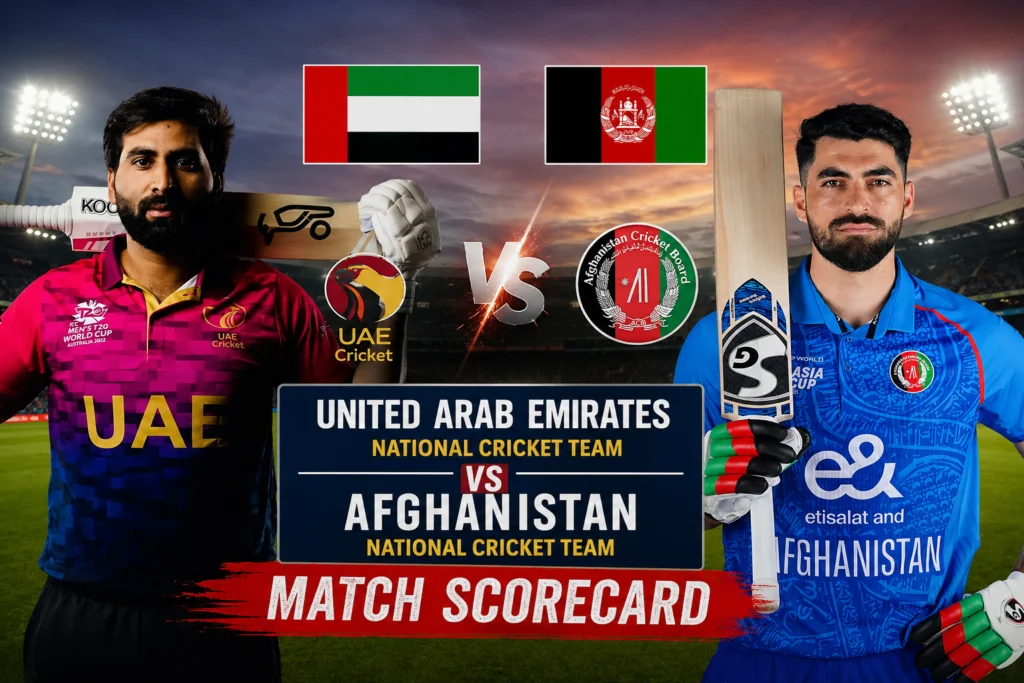
Cricket scorecards are useful because they preserve almost every important detail from an innings in one place. Many cricket fans visit cricstatsx.com to follow scorecards, player records, match results, and detailed statistics while keeping up with games from different competitions. The information may look complicated when someone sees it for the first time, but most scorecard sections are actually quite simple once their purpose becomes familiar. Runs explain batting output, wickets show dismissals, overs indicate available deliveries, and bowling figures reveal how effectively the opposition was controlled. Together, these numbers provide a much clearer picture of what happened during the match.
The final result is obviously important, but it does not always explain how the result was produced. A team might win because one batter played a remarkable innings, or because several bowlers worked together to restrict scoring. Another victory may depend on a strong partnership or a late burst of wickets. Reading the scorecard carefully allows fans to notice these details instead of remembering only who won and who lost.
Start With Match Context
Before examining individual statistics, it helps to understand the basic match situation. Fans should first identify which team batted first, how many overs were available, how many wickets were lost, and whether the match involved a target chase. These simple details provide a foundation for understanding almost every other number shown on the scorecard.
The same score can have completely different meanings depending on the circumstances. A total of 190 runs may be excellent on a difficult pitch but ordinary on a very flat surface where scoring has been easy throughout the competition. Similarly, a team reaching 190 for eight wickets has experienced a different innings from one reaching 190 for two wickets. Context turns basic numbers into useful information.
Understanding Runs And Wickets
Runs and wickets form the central part of most cricket scorecards because they immediately show how the innings developed. Runs indicate the team’s scoring progress, while wickets show how many batters have been dismissed and how much batting strength remains available. Looking at both numbers together gives a much better idea of the current situation.
A team at 120 for one wicket may be building a strong platform, while another team at 120 for seven wickets could be struggling to reach a competitive total. This simple comparison shows why the score should never be read without considering wickets. In a chase, the same information becomes even more important because every lost wicket reduces the number of players available to complete the target.
Reading Batting Statistics
The batting section usually includes runs, balls faced, fours, sixes, and strike rate for every player who has batted. Some scorecards also provide additional information about dismissal methods and other performance details. These numbers help fans understand how each batter contributed to the team’s overall total.
Runs are the easiest figure to understand, but balls faced provide additional information about the amount of time a player spent at the crease. Boundaries show part of the scoring method, while strike rate gives an indication of how quickly the player accumulated runs. Looking at these figures together is much more useful than deciding that the highest run scorer automatically played the best innings.
Why Batting Position Matters
A player’s position in the batting order can strongly influence how their statistics should be interpreted. Opening batters normally face the new ball and may have to deal with fresh fast bowlers, while middle-order players often arrive after the first few overs when field settings and bowling changes have already begun.
Lower-order players can have an entirely different responsibility because they may enter with only a few overs remaining. A quick twenty runs from fifteen balls could be extremely valuable in that situation, even though it looks small beside a seventy-run opening innings. Role and opportunity should therefore remain part of every sensible scorecard comparison.
Understanding Strike Rate
Strike rate compares runs scored with balls faced and is particularly important in limited-overs cricket. It helps fans see whether a batter was scoring quickly or using a more cautious approach during the innings. A high strike rate can indicate aggressive batting, but it does not automatically prove that the performance was better.
A batter may intentionally play slowly when wickets have fallen early and the team needs stability. Later, another batter may attack because only a few overs remain. Their different strike rates reflect different responsibilities rather than necessarily different levels of ability. The match situation always deserves attention before judging a batting number.
Looking At Boundary Usage
Fours and sixes provide another useful way to understand how runs were created. Some batters depend heavily on boundary shots, while others prefer running between wickets and collecting smaller scoring opportunities. Both approaches can produce successful innings under the right circumstances.
Boundary numbers can also show changes in batting intent. A player might score only a few boundaries during the early overs and then become more aggressive toward the end. Another player may attack from the first delivery. Comparing boundaries with balls faced and strike rate can help fans understand these different approaches more clearly.
Reading Bowling Performance
The bowling section usually shows overs, maidens, runs conceded, wickets, and economy rate. These figures describe the workload and effectiveness of each bowler during the innings. Wickets are important because they remove batters, but run control can also be a major contribution when the batting side is trying to maintain a high scoring rate.
A bowler taking one wicket for twenty runs may have created excellent pressure, while another taking three wickets for fifty-five runs may have played a more aggressive but expensive role. Neither performance can be understood properly by looking at wickets alone. The complete bowling line provides a better starting point for evaluation.
Understanding Economy Rate
Economy rate tells fans how many runs a bowler conceded during an average over. This number becomes particularly important in limited-overs cricket because the batting team has a fixed number of deliveries to score as many runs as possible.
A low economy can indicate strong control, but the ideal figure changes depending on the match format and bowling role. A bowler operating during the final overs may naturally concede more runs because batters are taking greater risks. A middle-over spinner may have a lower economy because the team is using them mainly to restrict scoring and create pressure.
Why Wickets Need Context
Wickets are often treated as the most important bowling statistic, but not every dismissal has the same value. Removing a batter who has already scored heavily may have a much larger effect than dismissing a lower-order player near the end of an innings.
The timing of a wicket also matters. A dismissal during a long partnership can completely change momentum, especially if the batters were scoring quickly. Several wickets falling close together may cause a collapse that dramatically changes the expected final total. Scorecards help fans identify these patterns through wicket timings and batting figures.
Understanding Fall Of Wickets
Fall-of-wickets information shows the score at which each batter was dismissed. This creates a timeline that helps fans understand whether wickets were lost steadily or in sudden groups. It can reveal important periods of pressure that are not obvious from the final team total.
For example, a team may lose two wickets quickly before building a large partnership. Later, another cluster of wickets might stop the innings from reaching an even bigger score. Looking at this sequence provides a better sense of how the innings developed from beginning to end.
Studying Partnerships
Partnerships show how two batters combined to add runs before one of them was dismissed or the innings ended. Strong partnerships can rebuild an innings after early wickets, maintain momentum during the middle overs, or create a platform for aggressive late scoring.
The size of a partnership matters, but its timing matters too. A partnership of ninety runs after three early wickets may be extremely valuable because it restores stability. The same partnership during an already dominant innings may simply increase an existing advantage. Scorecard readers should therefore consider both size and situation.
Checking Extras
Extras are runs added to the team’s total without being credited directly to the batter. Wides, no-balls, byes, and leg byes are common categories shown in scorecards. These runs can become important during close matches because a handful of unnecessary extras may affect the final result.
A large number of wides may indicate poor bowling control, while no-balls can provide additional opportunities for the batting side. Byes and leg byes arise under different circumstances and should not automatically be treated as evidence of poor batting or bowling. The extras section simply provides another useful part of the innings record.
Following A Run Chase
Scorecards become especially valuable during a chase because the situation changes with almost every over. Fans can follow the current score, target, wickets lost, overs remaining, and required run rate to understand how close the batting team is to achieving the target.
A chase may look comfortable for several overs before two quick wickets create pressure. A strong partnership can then reverse the situation by increasing the scoring rate and reducing the number of required runs. Watching several scorecard figures together makes these changes much easier to understand.
Understanding Required Rate
Required run rate tells the chasing team how quickly it needs to score during the remaining overs to reach the target. The figure rises when the batting side fails to score enough runs and falls when boundaries or fast running produce a stronger scoring period.
Wickets should always be considered alongside the required rate. A team needing twelve runs per over with eight wickets available may still have several options, while the same requirement with two wickets left creates a much more difficult situation. Required rate provides useful information, but it works best alongside the rest of the scorecard.
Comparing Player Form
One scorecard cannot fully describe a player’s current form. Looking at several recent matches provides a much better idea of whether a batter or bowler is consistently performing well. Fans can compare runs, strike rates, wickets, economy figures, and contributions during important match situations.
Recent scorecards may also reveal changes in player roles. A batter could move higher in the order, while a bowler might begin receiving responsibility during the powerplay or final overs. These changes can affect statistics, so understanding the role is important when evaluating form.
Using Career Statistics
Career scorecards provide a broader picture of how players develop over time. Fans can examine changes in batting positions, scoring rates, bowling workloads, and consistency across different seasons and formats.
A player’s statistics may change naturally with age, experience, team role, and playing conditions. Some batters become more aggressive, while others become more controlled. Bowlers may change their style or workload as their careers progress. Historical scorecards help reveal these long-term patterns.
Comparing Different Cricket Formats
Test cricket, One Day cricket, and Twenty20 cricket require different statistical expectations. Test matches allow long periods for batting and bowling, so patience and consistency can be extremely valuable. One Day cricket requires careful management of fifty overs, while Twenty20 cricket places intense pressure on every delivery.
Because the formats are so different, comparing a Test strike rate directly with a Twenty20 strike rate can be misleading. Bowling economy should also be judged according to the format’s normal scoring environment. Fair comparisons require an understanding of what each format demands from its players.
Using Live Scorecards
Live scorecards are particularly useful for fans who cannot watch an entire match. They provide quick information about current scores, wickets, overs, leading batters, bowling figures, and sometimes required run rates or partnership details.
A person checking a scorecard during a short break can often understand the basic match situation within a few seconds. This convenience has made digital scorecards an important part of modern cricket coverage, especially when matches are taking place across different time zones.
Technology And Cricket Data
Modern cricket scoring depends heavily on digital systems that record events as they happen. Ball-by-ball information, video analysis, player tracking, and automated statistical tools allow fans and teams to access much more information than traditional scorekeeping provided.
Teams can use detailed data for opposition analysis, tactical preparation, training, and player development. Fans benefit from the same wider availability of statistics because detailed information can now be viewed quickly through online platforms and mobile devices.
Avoiding Simple Statistical Judgments
Statistics provide useful evidence, but they cannot explain every part of a cricket performance. A batter may score poorly while playing an important role during a difficult collapse, while a bowler may concede many runs because they were used against the strongest batters during high-pressure overs.
Fielding also deserves attention because catches, saves, positioning, and pressure can influence a match without appearing clearly in basic batting and bowling figures. The best analysis combines scorecard numbers with player roles, match conditions, pitch behavior, and tactical decisions.
Conclusion
Cricket scorecards provide a detailed numerical picture of how an innings develops through runs, wickets, partnerships, bowling figures, extras, scoring rates, and individual performances. Learning these sections helps fans understand the difference between a large score and a valuable score, between many wickets and important wickets, and between fast scoring and useful scoring. The numbers become far more interesting once their connection with match situations becomes clear.
Whether you enjoy Test cricket, One Day matches, or fast Twenty20 games, scorecards can make every contest easier to understand and discuss. For detailed cricket scorecards, player statistics, match information, and useful performance updates, visit cricstatsx.com and explore the numbers behind every match with greater confidence.
Read also :-
pakistan national cricket team vs south africa national cricket team